
 Image 1 of 1
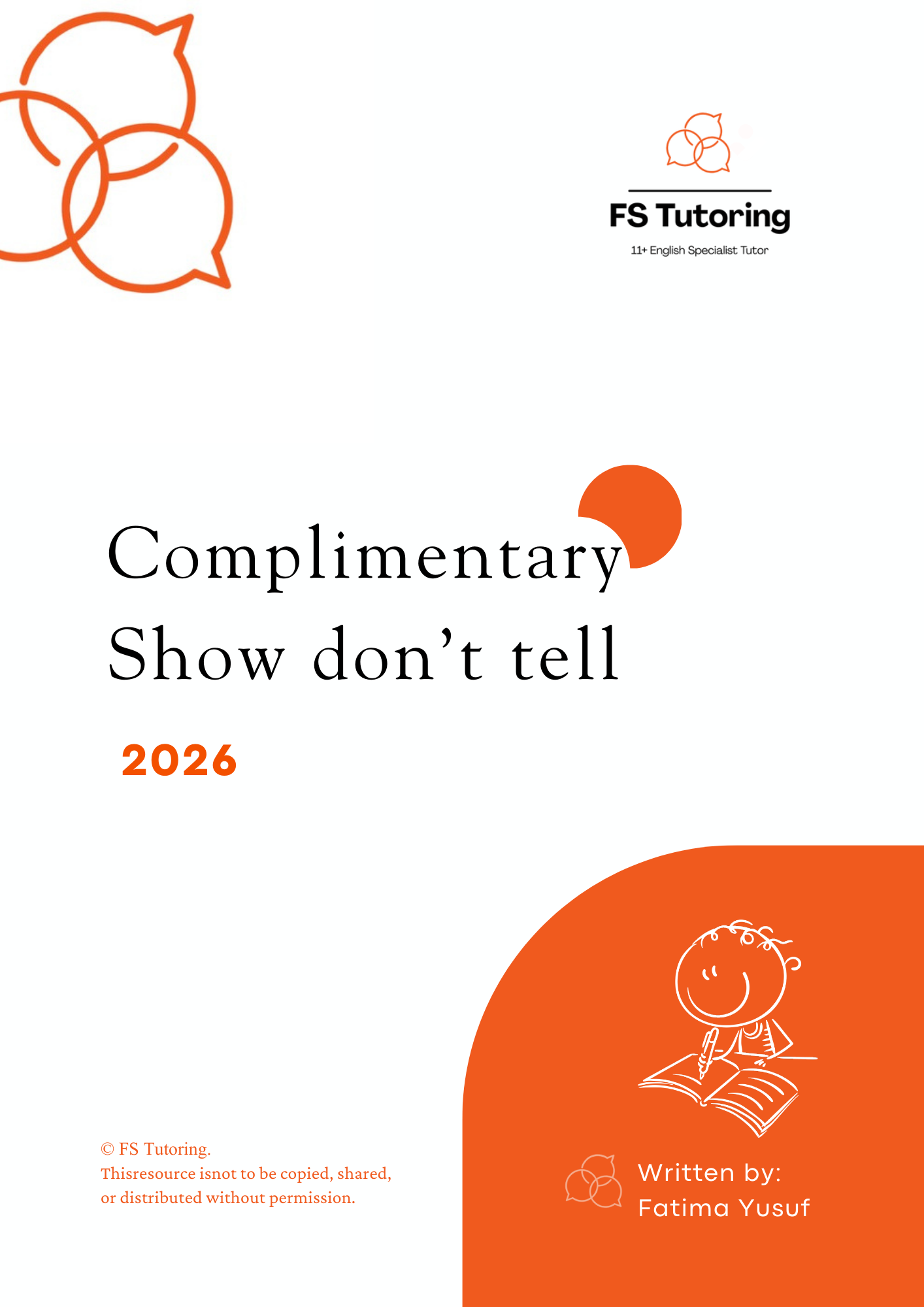
Enhance your child's narrative flair with this Complimentary "Show, Don’t Tell" Writing Resource, a specialist digital guide designed by 11+ English tutor Fatima Yusuf. This tool is essential for students aiming to move beyond basic statements and master the sophisticated descriptive techniques required for top-tier UK school entrance exams.
This resource teaches students the fundamental shift from "telling" a reader an emotion to "showing" it through physical and sensory detail. By deconstructing how the body reacts to feelings, students learn to create more immersive and engaging stories.
The Breakdown Method: Students are guided to analyse emotional responses across three key categories:
Body Reactions: Describing physical responses like trembling, sweating, or tense muscles.
Face Reactions: Illustrating emotions through facial expressions, such as a furrowed brow, wide eyes, or a clenched jaw.
Voice Reactions: Noticing how a character's voice might change to a shake, a choke, or a mere whisper.
The pack includes clear, professional examples to help students understand the impact of "showing":
Basic Telling: "I was terrified."
Advanced Showing: "My hands shook uncontrollably; my heart pounded in my chest. My eyes were wide, scanning the room, while my voice was a mere whisper..."
After learning the theory, students are prompted to apply the techniques themselves:
Emotion Selection: Choosing a specific feeling like fear, excitement, or anger.
Drafting Reactions: Writing specific body, face, and voice responses for their chosen emotion.
The Final Tie-Together: A final exercise to weave these individual reactions into a cohesive, descriptive paragraph.
Product Details:
Format: Digital Download (PDF).
Target Audience: Students preparing for 11+ and Key Stage 2 English.
Focus: Creative Writing, Emotional Intelligence in Literature, and Descriptive Techniques.
Please note: This is a complimentary digital resource for individual use. Copying or reselling without written permission is strictly prohibited
Enhance your child's narrative flair with this Complimentary "Show, Don’t Tell" Writing Resource, a specialist digital guide designed by 11+ English tutor Fatima Yusuf. This tool is essential for students aiming to move beyond basic statements and master the sophisticated descriptive techniques required for top-tier UK school entrance exams.
This resource teaches students the fundamental shift from "telling" a reader an emotion to "showing" it through physical and sensory detail. By deconstructing how the body reacts to feelings, students learn to create more immersive and engaging stories.
The Breakdown Method: Students are guided to analyse emotional responses across three key categories:
Body Reactions: Describing physical responses like trembling, sweating, or tense muscles.
Face Reactions: Illustrating emotions through facial expressions, such as a furrowed brow, wide eyes, or a clenched jaw.
Voice Reactions: Noticing how a character's voice might change to a shake, a choke, or a mere whisper.
The pack includes clear, professional examples to help students understand the impact of "showing":
Basic Telling: "I was terrified."
Advanced Showing: "My hands shook uncontrollably; my heart pounded in my chest. My eyes were wide, scanning the room, while my voice was a mere whisper..."
After learning the theory, students are prompted to apply the techniques themselves:
Emotion Selection: Choosing a specific feeling like fear, excitement, or anger.
Drafting Reactions: Writing specific body, face, and voice responses for their chosen emotion.
The Final Tie-Together: A final exercise to weave these individual reactions into a cohesive, descriptive paragraph.
Product Details:
Format: Digital Download (PDF).
Target Audience: Students preparing for 11+ and Key Stage 2 English.
Focus: Creative Writing, Emotional Intelligence in Literature, and Descriptive Techniques.
Please note: This is a complimentary digital resource for individual use. Copying or reselling without written permission is strictly prohibited